

How to Choose Transparent LED Film Screen
In our factory experience working with global clients, one question comes up again and again:
“Which model should I choose: P4, P6, or P10?”
The short answer is simple:
👉 The closer people stand, the smaller the pixel pitch you need.
👉 The farther away they are, the larger the pitch you can use.
If you’ve been comparing different transparent LED film screen models like P4, P6, or P10 and still feel unsure which one to choose, you’re not alone. This is one of the most common decision points for buyers. Before selecting a model, you should first understand how transparent LED film screen works.
What Does Pixel Pitch Mean?
Pixel pitch (P4, P5, P6, etc.) refers to the distance between LED pixels in millimeters.
- Small pitch (P4 / P5): High resolution, better for close viewing
- Large pitch (P10 / P15 / P20): Higher transparency, better for long distance
This creates a balance between clarity, transparency, and cost.
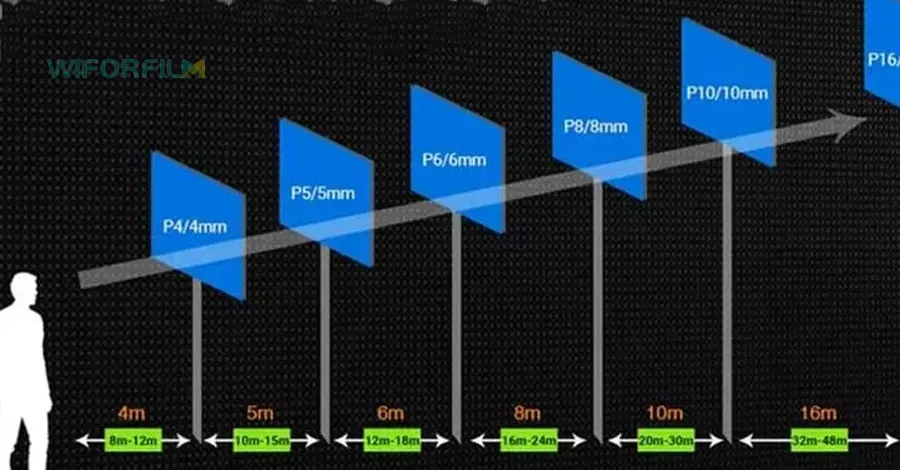
The Correct Viewing Distance vs Pixel Pitch
Here is the practical standard we recommend based on real installations:
| Model | Best Viewing Distance | Typical Application |
|---|---|---|
| P4 | 4–8 m | Retail windows, showrooms |
| P5 | 5–10 m | Shopping malls, glass storefronts |
| P6 | 6–12 m | Commercial interiors |
| P8 | 8–16 m | Office building glass |
| P10 | 10–20 m | Outdoor glass façade |
| P15 | 15–30 m | Large building media walls |
| P20 | 20m+ | Landmark / long-distance viewing |
Should You Choose Transparent LED Screen or Traditional LED Screen?
Before finalizing the pixel pitch, there’s another question many buyers don’t realize they should ask:
Is a transparent LED film screen actually the right solution for your project?
In some cases, a traditional LED display might offer better brightness or lower cost, especially for non-glass installations. However, for glass walls, storefronts, and modern architectural applications, transparent LED film screens provide unique advantages such as high transparency, lightweight structure, and minimal impact on natural lighting.
If you're still deciding between the two technologies, it’s worth reviewing a full comparison here: transparent LED film screen vs traditional LED display .
Once you've confirmed that transparent LED is the right choice, the next step is selecting the correct pixel pitch based on your viewing distance—which is exactly what this guide helps you do.
Common Mistakes Buyers Make
Choosing the Wrong Pixel Pitch for the Distance
This happens all the time.
Someone installs a P20 screen in a retail store where people stand 5–8 meters away — and then wonders why the image looks rough and pixelated.
On the flip side, we’ve seen clients insist on P4 for building façades where viewers are 30 meters away. It looks the same as P20 from that distance — just much more expensive.
Good selection is not about choosing the “best model.” It’s about choosing the right model for the distance.
Looking at Price First Instead of Result
Another common mistake is starting with price.
Yes, larger pitch is cheaper. But cheaper doesn’t mean better for your project.
If the screen looks unclear, it won’t attract attention — and then the whole installation loses its purpose.
If you're trying to understand where the cost differences actually come from, you can check this transparent LED film screen price guide, which breaks down how pitch, size, and specs affect total cost.
Real Project Examples (What Actually Happens)
Case 1: Retail Storefront (5–8m Viewing Distance)
Client initially requested: P6
We recommended: P4
Result:
- Text became readable from sidewalk
- Foot traffic engagement increased
- Client feedback: “Now it actually looks premium”
Case 2: Office Glass Wall (10–15m Distance)
Client unsure between P5 and P8
Final choice: P6
Why:
- Balanced clarity and transparency
- Maintained daylight visibility inside
Case 3: Outdoor Building Facade (25m+ Distance)
Client wanted “best quality” → asked for P4
We pushed back and recommended: P15
Result:
- Cost reduced by ~40%
- No visible difference from street viewing distance
Simple Selection Guide (Quick Decision)
If you need a fast answer:
- Within 5–10m → P4 / P5
- 10–20m → P6 / P8
- 20m+ → P10 / P15 / P20
This rule works for 96% of projects.
Conclusion
Choosing the right transparent LED film screen is simple when you follow the core rule:
Match pixel pitch with viewing distance.
A correct choice improves clarity, reduces cost, and maximizes your project’s impact.
For full product details, visit our transparent LED film screen main page.
If you’re not 100% sure, don’t guess.
Tell us your viewing distance, installation surface, and use case — we’ll recommend the exact model that fits your project.